Blackface
The mask which the actor wears is apt to become his face -- Plato
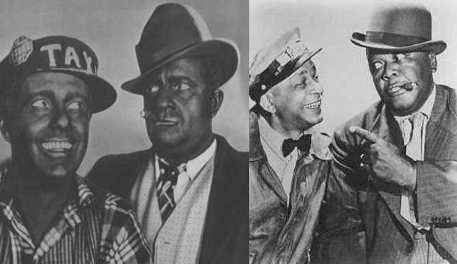
Blackface is more than just burnt cork applied as makeup.
It is a style of entertainment based on racist Black stereotypes
that began in minstrel shows and continues today.
The mask which the actor wears is apt to become his face -- Plato
Blackface is more than just burnt cork applied as makeup.
It is a style of entertainment based on racist Black stereotypes
that began in minstrel shows and continues today.
Andrew Kuntz
2012-05-24
For much of the 20th century onward, blackface minstrelsy has held an especially vilified place in American culture. Not that it was entirely embraced prior to that, for even in its prime in the mid-19th century minstrelsy was considered a “low” form of entertainment. Period social reformer Frederick Douglass minced no words about it, deriding the “filthy scum of white society, who have stolen from us a complexion denied to them by nature, in which to make money, and pander to the corrupt taste of their fellow white citizens.” His words will be appreciated by many today who still consider blackface minstrelsy the “poster child” of cultural exploitation of one race by another. However, minstrelsy has also been called the seedbed for all subsequent developments in American popular song, dance, and entertainment. For several decades, minstrelsy has been inspected through various revisionist lenses—it has, for example, been seen as an expression of cultural curiosity, an interface and point of cultural engagement between race and ethnicity, and, like rock-and-roll, an expression of a rebelliousness, “a raucous working-class alternative to the prissy ballads and light classical music that were popular at the time.” It has long been identified that minstrelsy contributed to the style, repertoire, and development of American traditional music, and that there is a continuous line of development between early minstrel bands, old time string bands, and modern bluegrass bands.
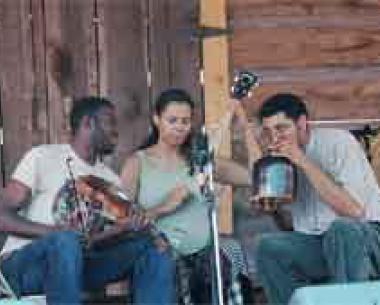
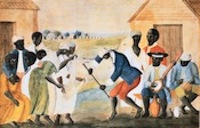
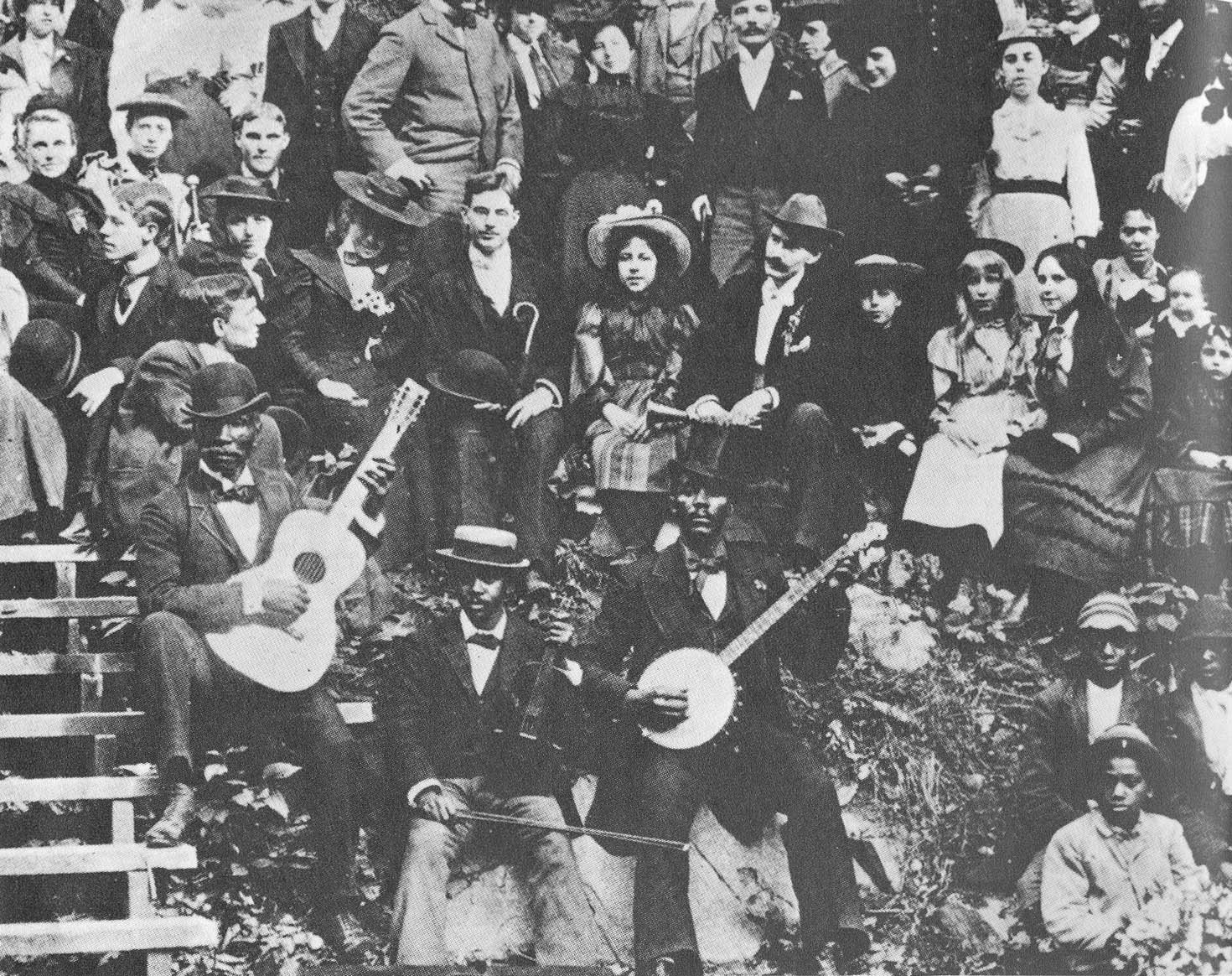
A benefit performance for Black String Revival, an hour-long documentary from Fretless Films which will tell the story of the rise and fall and the rise again of the Black string band tradition. Before the Blues--and the phonograph-- revolutionized popular music, African-American string bands featuring banjo and fiddle played for “frolics” (square dances), parades, house parties, corn shuckings, funerals, and baby christenings. Largely forgotten, this vital musical tradition survived into the 1950s. Now a new generation of blacks is rediscovering and reinvigorating the string band tradition. Black and white scholars are documenting the African origins of the banjo and how African-Americans adapted it. At the same time, young African-American string bands like The Carolina Chocolate Drops, The Ebony Hillbillies, Sankofa Strings, and Don Vappie and His Creole Jazz Seranaders are reinventing traditional banjo and fiddle music.
January 29, 2007
By Tony Thomas
Many unfamiliar with the real history of Black fiddling forget that fiddling was extremely common among African Americans until the early 20th Century. In the we have many reports of Africans in America fiddling and making fiddles almost as soon as they arrived from Africa. The excellence of Black fiddlers performing both for white masters, patrons, and paying audience and for the dances and parties of other Africans in America, speaks not only to the training in European violin playing some slaves received, but also to traditions of fiddling on African bowed instruments that slaves brought here. No wonder, fiddling was the most reported musical activity of African Americans during colonial times. Studies, particularly Bob Winans' survey of instruments mentioned in the WPA interviews of former slaves, show that fiddling was the most widely known instrumental music in Black folk life in the 19th Century.
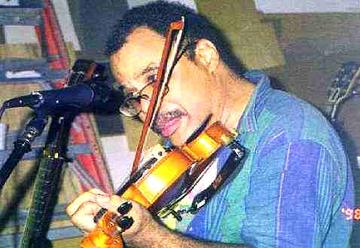
Yet, today there is relatively little knowledge in the Black community, let alone appreciation of traditional Black fiddling. As far as anyone know, Joe Thompson of Mebane North Carolina remains the last traditional African American fiddler, though a small group of younger African Americans like Earl White, Rique Prince, Rhiannon Giddens, and Justin Robinson are trying to continue the tradition in revivalist bands.
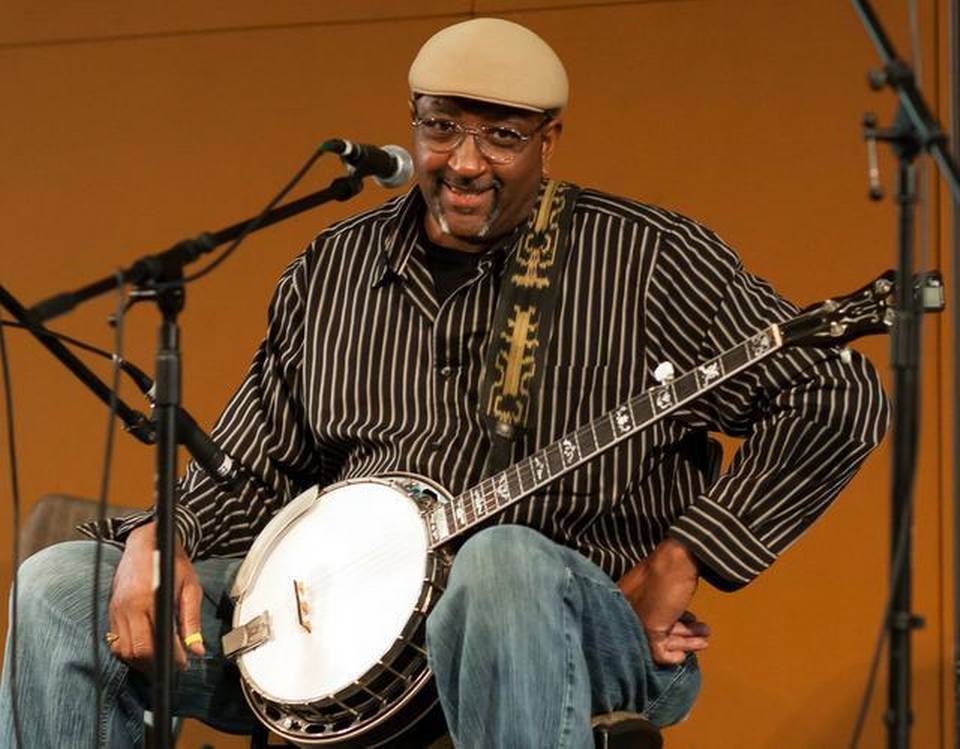
*The Banjo’s African American Heritage is celebrated on this dates Registry. Since Caribbean Blacks created the banjo in the 17th century and carried it to North America in the 18th century, the banjo has been part of African American heritage. An African New World combination of European and African elements, early banjos resembled plucked full spike folk lutes like the akonting of Gambia, Senegal, and Guinea-Bissau and the bunchundo of Gambia and Guinea-Bissau. Like these instruments, early banjos had gourd or calabash bodies covered by a skin membrane and wood bridges held by string tension. Most early banjos had four gut or fiber strings, often three long and one short drone string, though some had two long strings and one short string. Banjos’ flat fingerboards and tuning pegs, not found on indigenous West African instruments, came from European instruments.
I found this surprising reference in the Jerry Douglas Bulletin Board Archives.
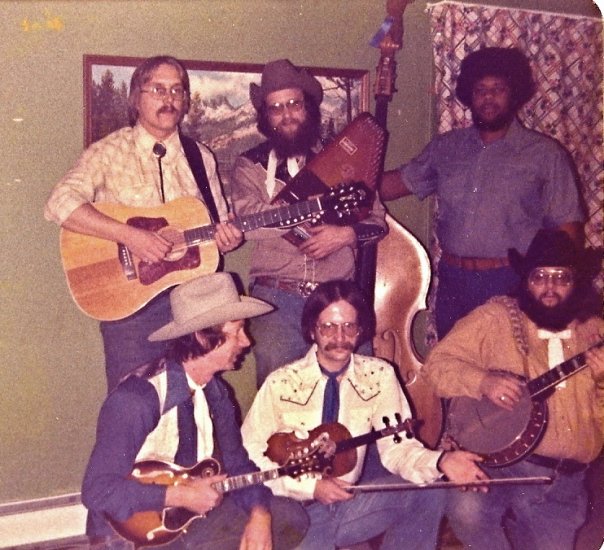
Several years ago when searching The Internet I ran across this posting made by the guy I bought my upright bass from. Since that time I lost track of the posting but a little while ago I re-discovered it. It follows here:
Subject: RE: Black Banjo Conference-very cool!
Poster: Daver
date: 30-Jan-05 08:32 PM
Thanks, Derka. I don't know all the reasons, but it's sad that there are virtually no African-Americans in professional Country Music (to my knowledge, only Charley Pride and bass players for Mary Chapin Carpenter and Russ Taff), and zero that I'm aware of in bluegrass. Please fill in the blanks if I'm missing someone obvious... A Chicago area bluegrass group in the 70's (the Unity Bluegrass Band - all members of the Bahá'í Faith) had an African-American bass player (I sold him my old Kay upright for the $80 I paid for it). Up until IBMA when I ran into the Ebony Hillbillies, he was the only African-American BG musician I had ever seen.
Guess I'm pretty unique. *G*
Update: 6-16-13 - just checked the link of this message post and it no longer exists, it was good that I copied it here, otherwise it would be lost now and can't have my history disappearing on me...
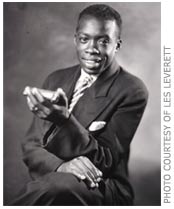
Deford Bailey was the most influential harmonica player in the first half of the 20th Century. Despite such acclaim, Deford dies quietly without recognition of his place in American music history...
DeFord's family played tunes that were part of a rich tradition of string band playing shared by both blacks and whites in the early nineteenth century.
"White and blacks would be playing music and dancing at what you'd call a barn dance—you clean the ground off and put sawdust down on it and make it soft where you can dance. Well, they'd look out and see the Baileys and they'd say, ‘Here come the Baileys, we'll turn the thing over to them. They would usually have a fiddle, guitar, banjo, harp, mandolin, and drums.’"
The first non-Native American settlers of Appalachia and later, the Ozarks, were of primarily of three ethnicities: Scots-Irish, English, and German. These hard-working farmers and craftsmen created a distinct culture which in the 19th Century came to be named “hillbilly.” Although the Northern European roots of hillbilly are routinely acknowledged, even scholars on the culture are far less likely to recognize hillbilly’s other significant place of ancestral origin, West Africa.
Hillbilly music’s biracial parentage should be immediately evident to anyone with any knowledge of the music’s primary instruments, the fiddle and the banjo. The modern fiddle (or violin) may have originated in 16th Century Italy but similar bowed instruments preceded its development by several centuries and the violin made its way to the Americas thanks to English colonists. The banjo, descended from the numerous plucked instruments of West Africa such as the akonting, ngoni, and xalam, was introduced to the Americas by African slaves.
Famous slave owners like George Washington, Thomas Jefferson, James Madison, James Monroe,Andrew Jackson, Martin Van Buren, William Henry Harrison, John Tyler, James K. Polk, Zachary Taylor, and Andrew Johnson routinely required their forced laborers to learn to play violin to entertain their friends and themselves at plantation balls and the White House.
by Eric Brightwell